“The beautiful, authentic work that people continue to create with such boldness and fearlessness, to speak their truth and take a stand – that gives me hope.”
Read More
“The beautiful, authentic work that people continue to create with such boldness and fearlessness, to speak their truth and take a stand – that gives me hope.”
Read More“Choreographer and director Camille A. Brown was honored by the International Society for the Performing Arts (ISPA) on Thursday evening, January 14th, 2020 with the Distinguished Artist Award, presented by Alicia Adams, VP International Programming at The John F. Kennedy Center for the Performing Arts.”
Read More“Tony Award-nominated choreographer and director Camille A. Brown (Choir Boy) is the recipient of the 2021 Distinguished Artist Award from ISPA. The global association of more than 500 arts management leaders recognizes outstanding individuals for their contribution to the arts and their communities with the award.”
Read More“Although Camille A. Brown has been well praised by fans, colleagues and critics, although the sheer number of awards, commissions and other honors she has received over the past two decades is exceptionally high, she remains one of those successful artists with no time for ego. She's not driven by it. Rather—as performer, maker, educator and advocate—she's motivated to highlight the complex histories and lived experiences of people of the Black diaspora and to celebrate, especially, our outstanding creativity in music and dance.”
Read More“Now is the time to consider self-care as not just a necessity, but as a revolutionary act. Self-care is more than a requirement. It is survival. It may seem like caring for ourselves is not radical, but considering the exhaustive amount of labor, perseverance, and resilience it takes to navigate being a Black artist working in theater today, centering our self-care is revolutionary.”- Camille A. Brown
Read More“In his 1965 essay, "The Revolutionary Theatre," Amiri Baraka called Black theatre-makers to respond to the racial injustice and civil unrest in the United State of America and demanded that theatre challenge the status quo. Now in 2020, history repeats itself.”
Read More"Broadway may be shuttered due to the pandemic, but Variety is keeping its annual tradition of celebrating the world of stage with a digital event, “Legit! The Road Back to Broadway,” presented by City National Bank at 9 a.m. PDT Sept. 24 in the Variety Streaming Room. Panels will feature Variety’s Broadway to watch"
Read More“Since 1954, Dance Magazine has celebrated the living legends among us with the Dance Magazine Awards. This year, in light of deep reflections on racial equity inspired by the Black Lives Matter movement, the selection committee decided to take a close look at exactly who the magazine has honored over the past seven decades. Unsurprisingly, the list is overwhelmingly white. Although it's grown more diverse in recent years, many brilliant artists of color have been left out for far too long.
So for 2020, in order to reckon with and take a step toward repairing that history, the committee chose an outstanding group of all-Black artists. I'm delighted to announce our incredible honorees for 2020”
Read More“The dancer and choreographer was on a career high when the pandemic hit. Now she has created a virtual school powered by the kind of social dance at the heart of her work.”
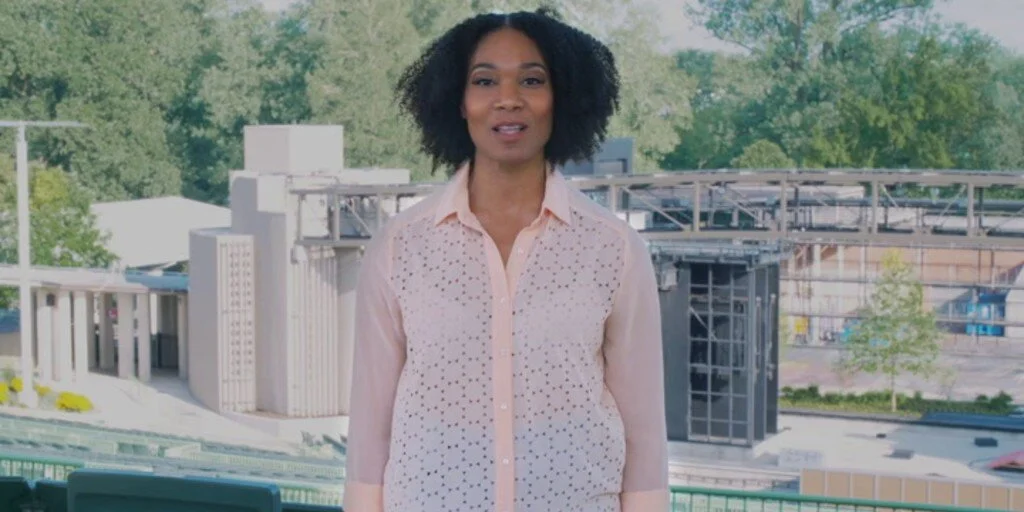
Read More“Muny artist Chloe Davis has honored Black choreographers like Camille A. Brown, Debbie Allen, and George Faison by making a video that highlights the characteristic styles of each—all of whom paved the way for her to pursue her dreams as a performer. Check it out above, filmed throughout the St. Louis venue's grounds.”
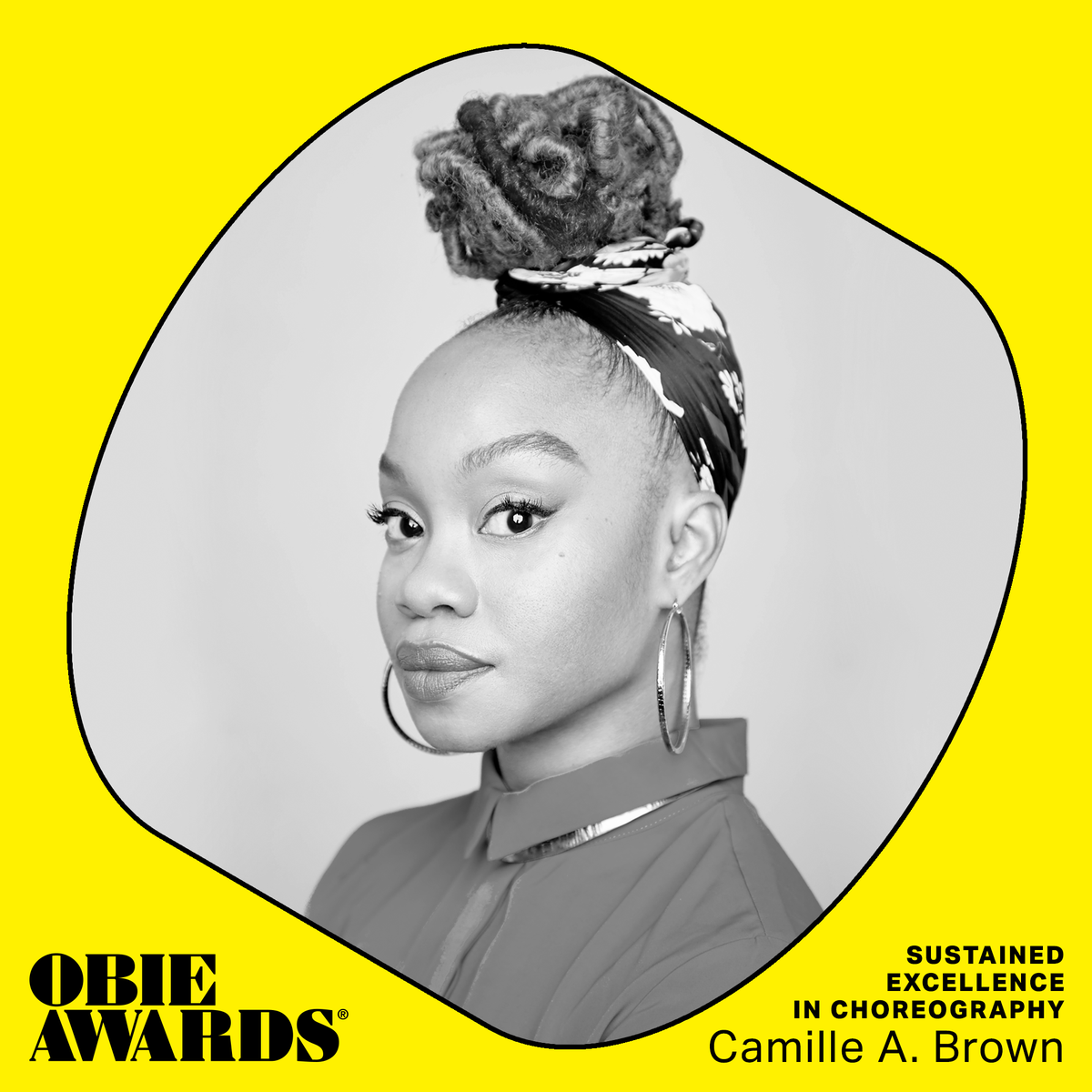
Read More“Tonight, in celebration of Off- and Off-Off Broadway theater, the American Theatre Wing and The Village Voice honored the recipients of the 65th Annual Obie Awards. Watch the full show here!
"There has never been a more important time to gather - even if we can't be in the same room - to honor the work of the boldest and bravest among us," said Heather Hitchens during the show. "It's our collective responsibility to ensure this moment lives up to its promise - by making space for and upholding the voices of artists who will challenge the status quo, move our culture forward, and evolve the landscape of American theatre."‘
Read MoreIn case you missed it, Camille A. Brown is still cornering the New York City dance market.
With this morning's announcement of the Off-Broadway League's 2020 Lucille Lortel Award nominees, Brown showed that, yet again, she cannot be stopped.
Even in a season cut short due to the theater industry's total shutdown resulting from the COVID-19 Coronavirus pandemic, Brown leads the field of five nominees for Outstanding Choreographer with two nominations, herself. First, for last fall's production of 'For Colored Girls Who Have Considered Suicide/When The Rainbow Is Enuf' at the Public Theater, and second for last summer's 'Toni Stone' at Roundabout Theatre Company's Laura Pels Theatre.”
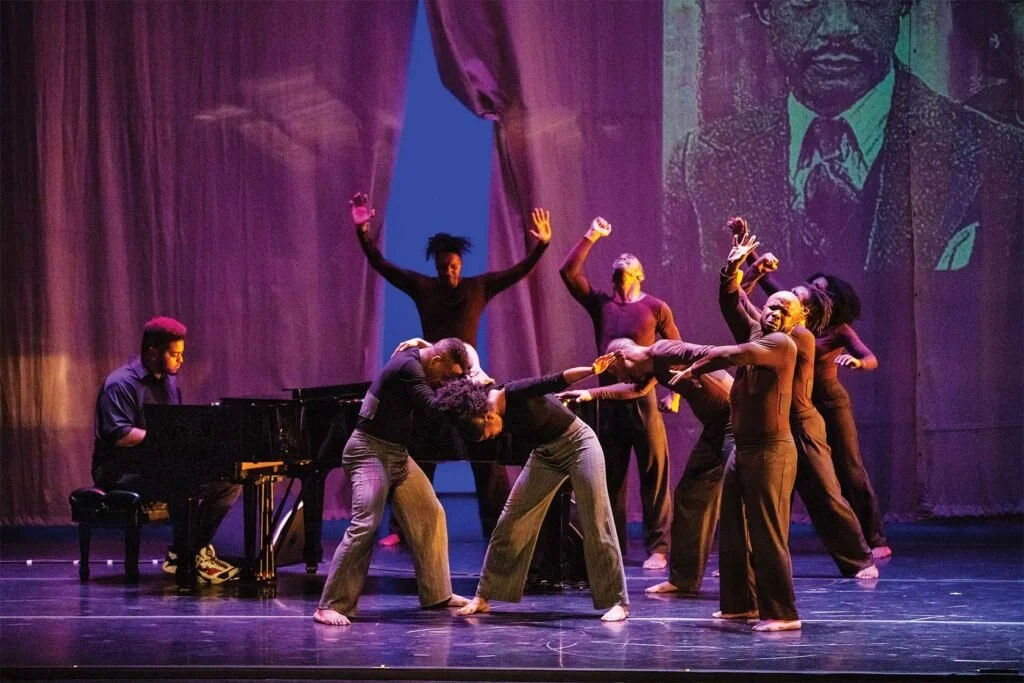
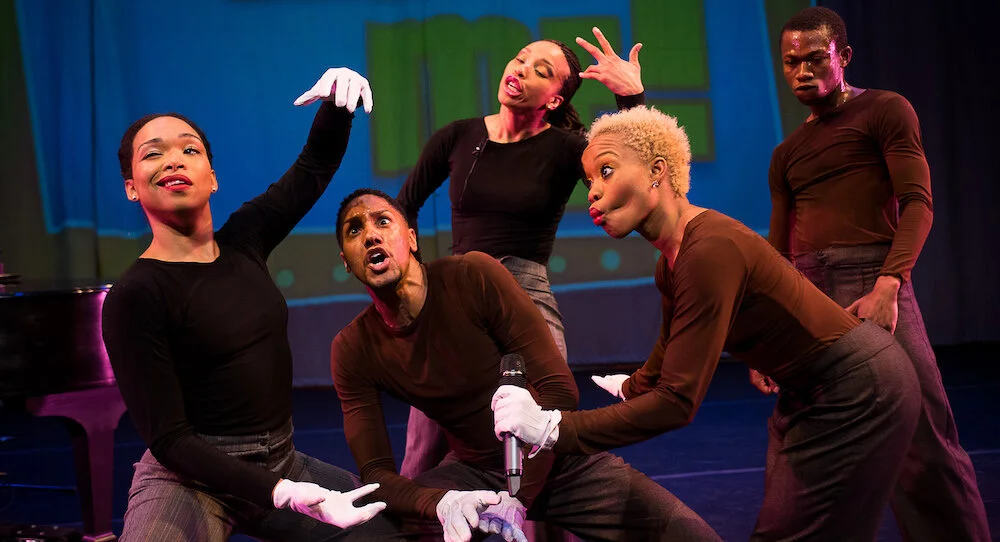
Read More“Camille A. Brown and her company Camille A. Brown & Dancers began their Celebrity Series of Boston debut at the Boch Center Shubert Theatre Saturday night by summoning the gifts, legacy and complicated history of black performers.
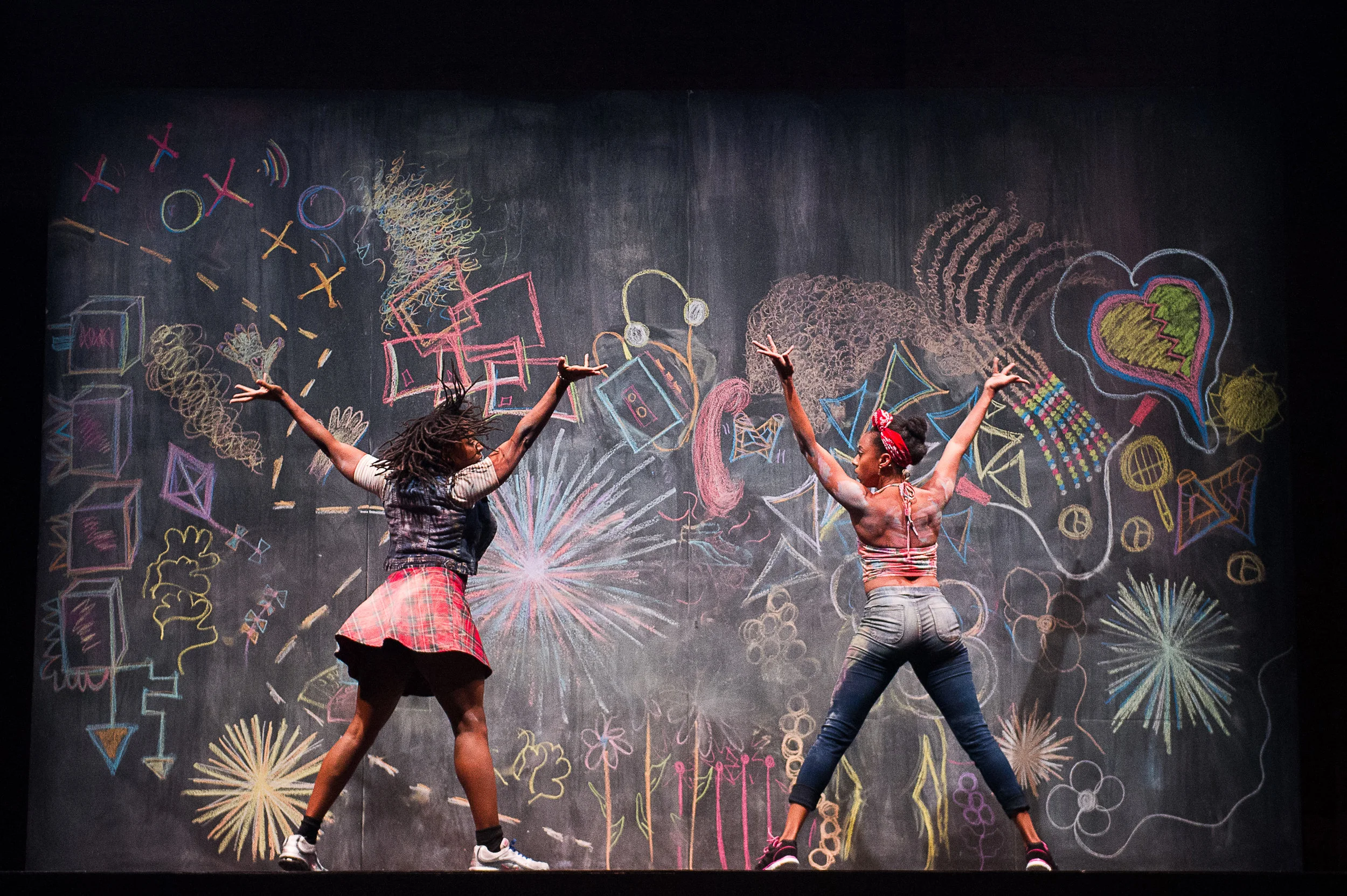
Unfolding like a family album, images were projected behind the dancers that varied from grainy archival footage of minstrel shows and cakewalk pageants to vintage photos of cinema maids and butlers and video clips of TV comedians of the 1950s and ’60s. Meanwhile, an eight-member ensemble performed a torrent of complex and supple movements in unison, pairs and solos, white sneakers highlighting fast feet, to rhapsodic, propulsive live piano music.”
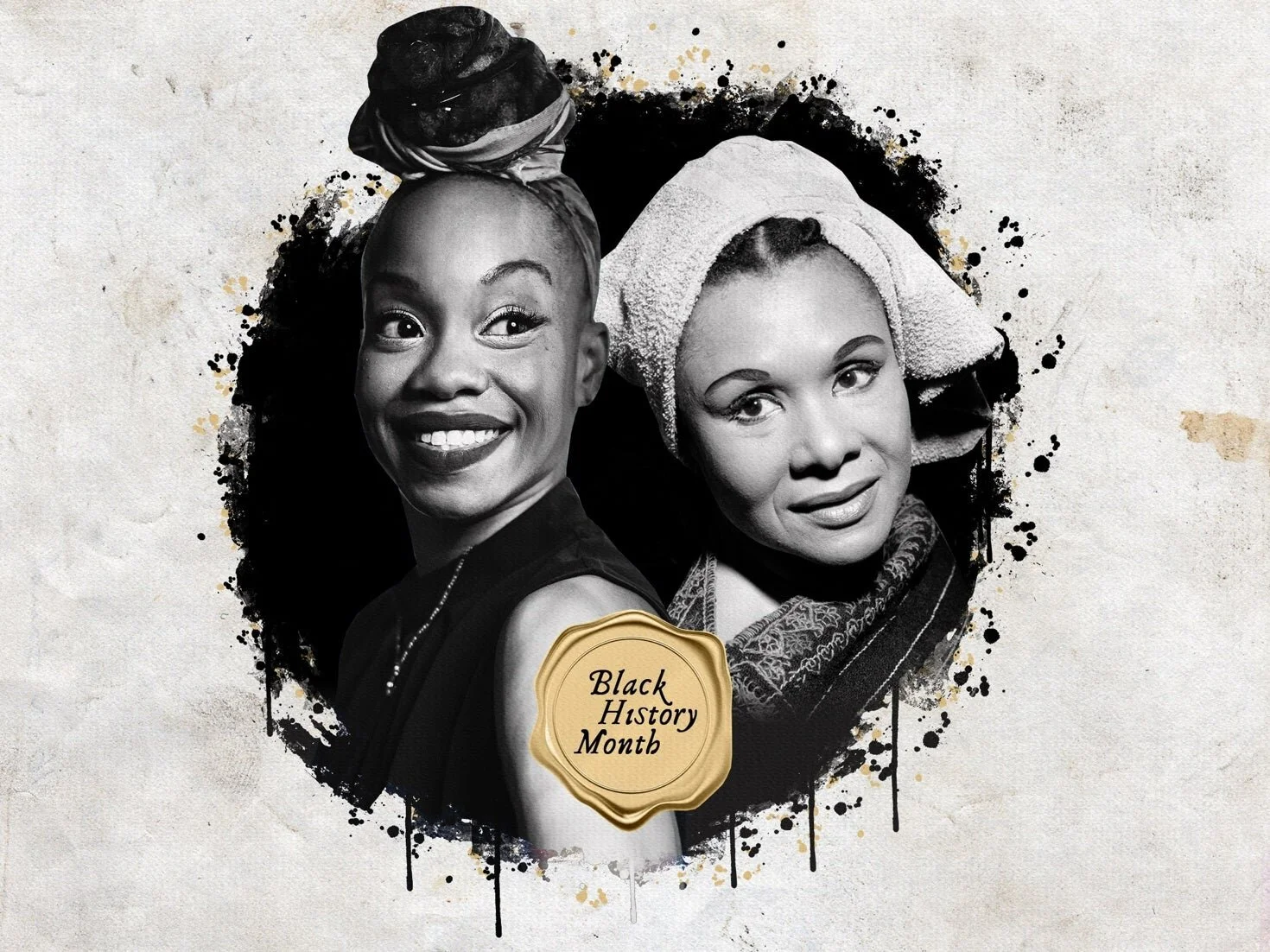
Read More“In honor of Black History Month, Broadway.com asked actors, directors and playwrights to tell us about black theater-makers who inspired them. Stars jumped at the chance to honor those who came before them, and in the process, taught us about the fundamental contributions of black artists to the American theater.”
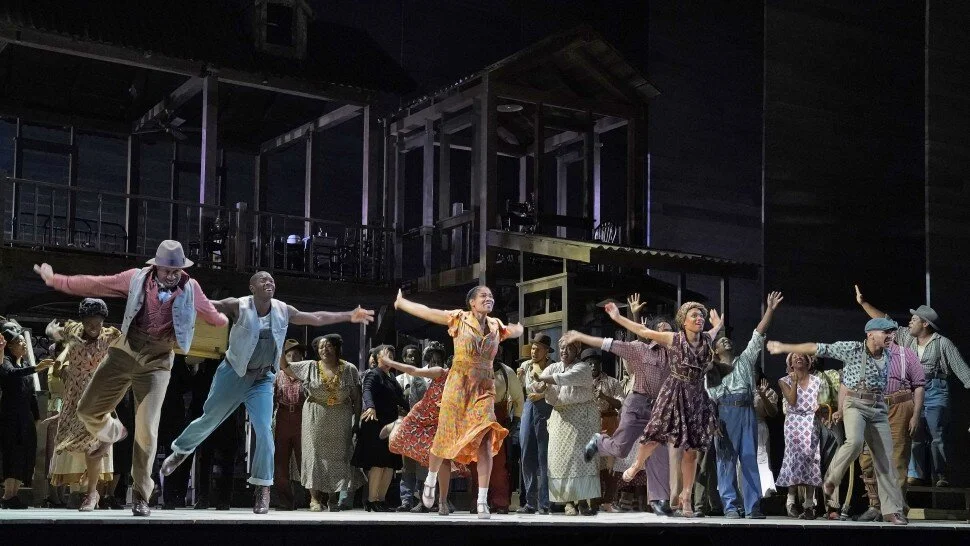
Read More“hen James Robinson’s electric new production of Porgy and Bess returned the Gershwins’ great American opera to the Met stage last fall, audiences couldn’t help but be swept away by the vibrancy of Catfish Row. Not only did the 90-person cast sing beautifully, they also expressed their joys and sorrows through “alternately sinuous and frenzied movement” (The New Yorker) choreographed by Camille A. Brown, the Tony Award nominee who made her company debut with the staging.
In much of her work, Brown encourages her dancers to tap into their shared “blood memory,” as she calls it, and she brought this same approach to the choreography for Porgy and Bess. “Movement is such a strong part of African American culture,” she explains. “We have all of this history in our bodies, and I wanted the cast to tap into that. Everyone has a very specific view of what dance is—the turns, the spins, the flips—but there’s also another side of dance that comes from the black experience that is inside each one of us.”’
Read More“Over the past year, this choreographer’s influence has been felt on dance, theater and opera stages: She has said that she almost sees her “dancers as actors,” and she most likely also sees actors as dancers. From her finely wrought “ink,” the final dance in a trilogy exploring African-American identity, to her work on the Metropolitan Opera’s “Porgy and Bess,” the Public Theater’s “For Colored Girls Who Have Considered Suicide/When the Rainbow Is Enuf” and “Choir Boy” on Broadway — for which she was robbed of a Tony — Ms. Brown is one of the most expressive, genuine and deeply felt choreographers working today.”
Read More“Camille A. Brown is one of the busiest modern dance choreographers in New York these days – having recently choreographed “Once on This Island” and “Choir Boys” on Broadway, “Jesus Christ Superstar” for live network TV, and currently “Porgy and Bess” at the Met Opera, and “For Colored Girls…” off-Broadway at the Public Theater – is appeared with her company at the Joyce Theater this weekend, November 9-10 – three shows only – with the concert dance piece that arguably put her on the map, “Mr. TOL E. RAncE.” She created it in 2012 as the first part of her trilogy on Black identity, and it shows a remarkable degree of theatrical sophistication in service of its timely theme.”
Read More“It can be truly striking to sit back and reflect upon how American “pop” culture developed. Interestingly, so much of it derived from the traditions of those displaced through the African diaspora. Heartbreakingly, those were the same people whom American culture repressed, oppressed and dehumanized. What is also astounding is just how much joy, gratitude and love lie within these cultural products — from dance to music to poetry to visual art — even in the face of such subjugation (and the struggles that resulted).”
Read More“It’s a connection that Shange recognized. Before her death, Shange interviewed Ms. Brown for a book she was writing about dance. (“I should be interviewing you,” Ms. Brown recalls thinking.) Planning the “For Colored Girls” revival, she told Ms. Gardiner that Ms. Brown was her choice for choreographer.”
Read More" BGLP thus offers a unique performance through which to theorize Black womanhood. Its respect for the non-verbal invites audiences to study embodiment without necessarily relying on pre-existing logocentric vocabularies of stereotype. This is not to say that dance is antithetical to the word, or that the word cannot fully capture dance. Rather, to argue that movement is its own vocabulary—one that can make visible that which Black American women have been historically prohibited from fully saying out loud.”
Read More